
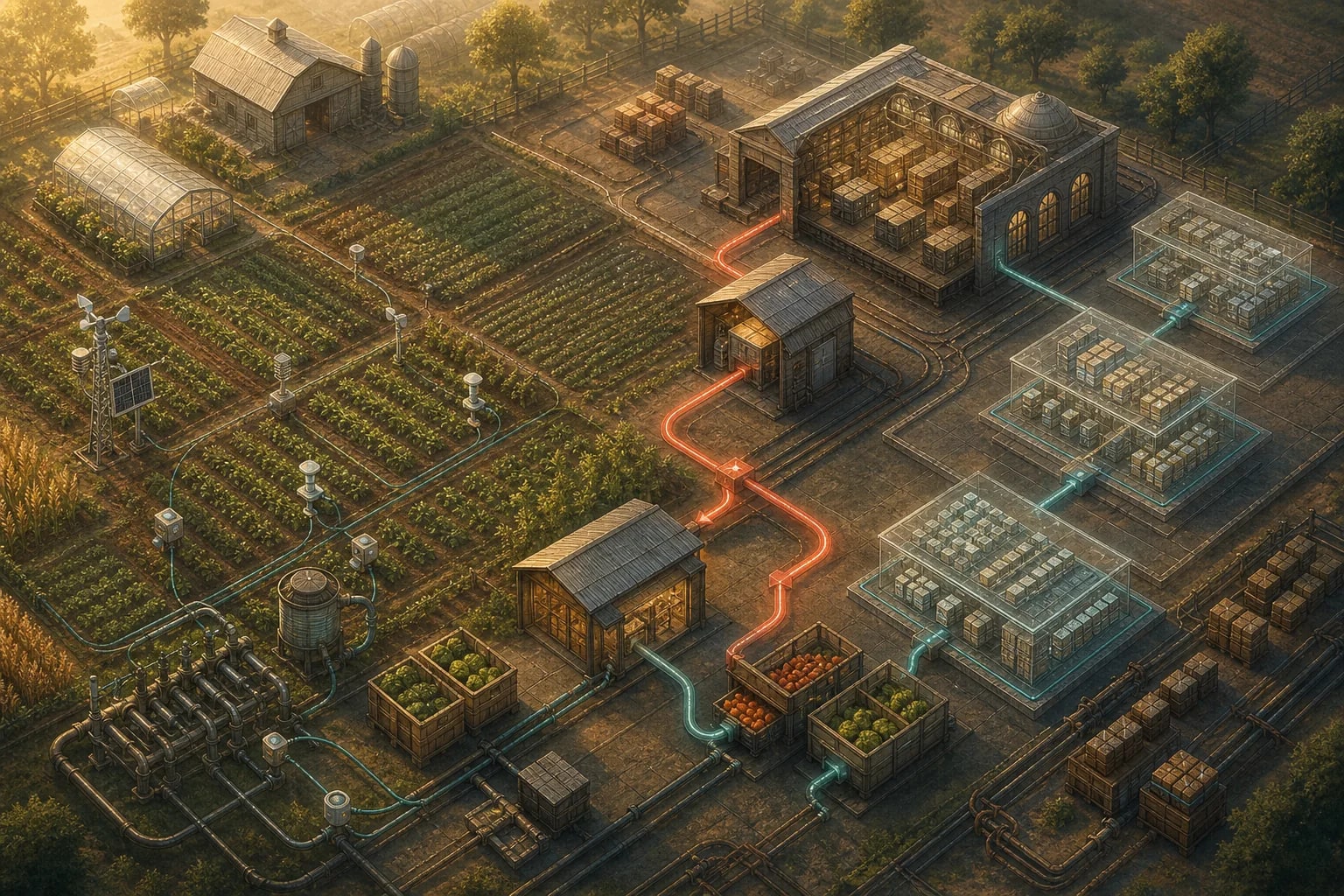
Farm Data Harvest: Understanding ETL vs ELT
Welcome to Green Valley Farms! 🌱🚜
Hello, data farmer! At Green Valley Farms, we need to gather information about our crops, analyze it, and store it properly to make better farming decisions. To do this, we use data integration techniques called ETL and ELT.
Farmer Ted, our farm manager, needs to understand the difference between these two approaches:
- ETL (Extract, Transform, Load): The traditional approach where we clean and process our crop data before storing it in our data warehouse.
- ELT (Extract, Load, Transform): A newer approach where we store all raw data first, then process it within the data warehouse.
In this activity, you'll help Farmer Ted learn about both approaches by:
- Arranging the correct steps for ETL and ELT processes
- Understanding when to use each approach
- Comparing their advantages and disadvantages
Let's get our hands dirty and learn about data harvesting!
ETL: Extract, Transform, Load 🌱
ETL is the traditional approach to data integration. Think of it like harvesting crops, cleaning and processing them at the farmhouse, and then storing the prepared produce in the barn.
Your task: Arrange the ETL process steps in the correct order by dragging them from the field to the sequence area.
Available Steps
ETL Process Sequence
ELT: Extract, Load, Transform 🚜
ELT is a newer approach that takes advantage of modern data warehousing capabilities. It's like bringing all harvested crops directly to a high-tech barn that can sort, clean, and process everything on-site.
Your task: Arrange the ELT process steps in the correct order by dragging them from the field to the sequence area.
Available Steps
ELT Process Sequence
Comparing ETL and ELT: Which to Choose? 🤔
Now that you understand both ETL and ELT processes, let's compare them to help Farmer Ted decide which approach is best for different farm data scenarios.
Key Differences
- Better for limited data warehouse resources
- Good for small to medium data volumes
- More mature and established process
- Data privacy compliance (sensitive data handled before loading)
- Works well with older systems
- Faster loading of raw data
- Better for big data scenarios
- More flexible transformations after loading
- Can transform data on-demand as needed
- Leverages modern data warehouse capabilities
- Slower overall process
- Limited by processing server capacity
- Less flexible if new transformations needed
- Data transformations are predefined
- Requires robust data warehouse with processing power
- More storage needed for raw data
- Potential security concerns with sensitive raw data
- Can be more complex to manage
When to Use Each Approach
- When working with legacy systems
- When data privacy requires filtering sensitive information before storage
- When your data warehouse has limited processing capabilities
- When dealing with small to medium data volumes
- When predefined, consistent transformations are needed
- When working with big data volumes
- When using modern cloud data warehouses
- When flexibility for future analysis is important
- When you need fast data ingestion
- When different transformations might be needed for different analyses
Your task: Help Farmer Ted decide which approach (ETL or ELT) is better for different farm scenarios.
Great Job, Data Farmer! 🎉🌱🚜
Excellent work! You've successfully learned the differences between ETL and ELT data integration processes. Now Farmer Ted understands how to handle farm data more effectively!
Remember these key points:
- ETL (Extract, Transform, Load) transforms data before loading it into the data warehouse - like cleaning and sorting crops at the farmhouse before storing them.
- ELT (Extract, Load, Transform) loads raw data first, then transforms it within the data warehouse - like bringing all crops to a high-tech barn with built-in processing capabilities.
- Both approaches have their place in modern data integration, depending on your specific needs, data volume, and infrastructure.
Just like farming, data management requires selecting the right tools and techniques for the job. With your new knowledge of ETL and ELT, you're ready to help Farmer Ted make the most of Green Valley Farm's data!
